Wealth Management vs Asset Management: What’s the Difference and Which Do You Need?
Insights on strategy, resilience, and wealth management in an evolving financial landscape.
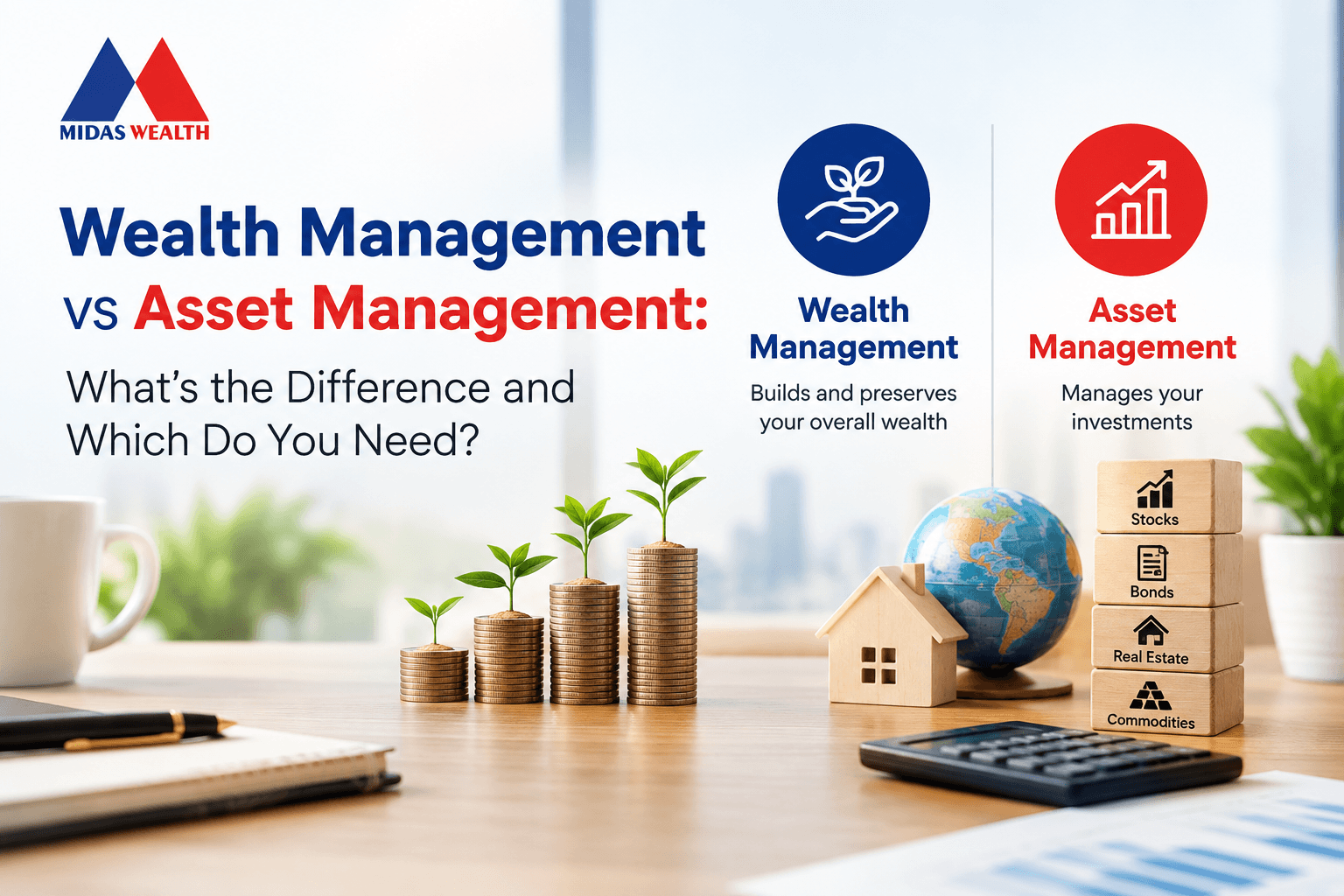
Managing money effectively requires more than just saving and investing. You also need a clear financial plan that supports your short-term needs and long-term goals. Two services that can help you achieve these goals are wealth management and asset management. Although these terms are often used interchangeably, they serve different purposes.
Wealth management focuses on your overall financial well-being, including financial planning, investments, retirement, and tax planning. Asset management primarily focuses on managing investments to help grow and protect your portfolio. Understanding the difference between wealth management vs asset management can help you choose the right service for your financial situation.
What Is Wealth Management?
Wealth management is a comprehensive financial service that helps individuals and families manage their money, build wealth, protect assets, and plan for the future. It considers your entire financial situation, including income, expenses, investments, liabilities, retirement goals, and family requirements.
A wealth manager evaluates your financial position and develops a strategy based on your goals, risk tolerance, and investment timeline.
Key Services Offered by Wealth Managers
- Financial planning: Creating a structured plan for managing income, expenses, savings, and investments.
- Investment planning: Selecting investments that align with your financial goals and risk tolerance.
- Retirement planning: Estimating retirement expenses and preparing for long-term financial security.
- Tax planning: Identifying suitable tax-planning strategies within applicable laws.
- Estate planning: Planning how assets may be transferred to beneficiaries, often with support from legal professionals.
- Risk management: Reviewing financial risks and considering suitable insurance or other protective measures.
- Portfolio review: Monitoring investments and adjusting the financial plan when circumstances change.
The exact services depend on the provider and the arrangement agreed upon with the client.
Benefits of Wealth Management
Wealth management provides a broader view of your finances. Instead of considering investments in isolation, it connects them with your other financial responsibilities and future goals. Its benefits may include better financial organisation, goal-based investment planning, retirement preparation, tax efficiency, and a clearer strategy for managing wealth over time.
Who Should Consider Wealth Management?
Wealth management can benefit professionals, business owners, families, retirees, and individuals who want structured financial guidance. It can be particularly useful if you have multiple financial goals, different types of investments, retirement requirements, or plans to transfer wealth to future generations. You do not necessarily need to be extremely wealthy to benefit from financial planning. The right service depends on your needs, available resources, and the complexity of your financial situation.
What Is Asset Management?
Asset management is the professional management of investments with the objective of achieving specific financial outcomes. These outcomes may include capital appreciation, income generation, or a balance between growth and income. An asset manager studies financial markets, evaluates investment opportunities, and manages a portfolio according to an agreed investment strategy.
Asset management can cover investments such as equities, bonds, mutual funds, and other financial instruments, depending on the manager's mandate and the client's requirements.
How Asset Management Works
The process usually begins with understanding the investor's objectives, investment horizon, risk tolerance, and portfolio requirements. Based on this information, the asset manager develops an investment strategy, selects appropriate assets, and monitors portfolio performance. The manager may make adjustments as market conditions change or when the portfolio moves away from its intended allocation.
For example, an investor seeking long-term capital growth may have a portfolio focused on equities, while someone prioritising income and lower volatility may require a different allocation. Asset management does not guarantee profits or eliminate investment risk. Portfolio performance depends on market conditions, investment choices, costs, and other factors.
Key Services Offered by Asset Managers
- Portfolio management: Selecting and managing investments according to an investment mandate.
- Investment research: Analysing companies, industries, economic conditions, and financial markets.
- Asset allocation: Distributing investments across different asset classes based on the investment strategy.
- Risk assessment: Evaluating portfolio risks and managing exposure within agreed limits.
- Performance monitoring: Measuring investment performance against relevant benchmarks.
- Portfolio rebalancing: Adjusting investments to maintain the intended asset allocation.
Wealth Management vs Asset Management: Key Differences
The main difference between wealth management and asset management is the scope of the services provided. Wealth management considers your overall financial life, while asset management concentrates on managing investments.
1. Financial Goals and Objectives
Wealth management addresses several financial objectives, including purchasing property, funding education, preparing for retirement, managing taxes, and transferring wealth. Asset management focuses more directly on investment-related objectives, such as portfolio growth, income generation, and managing investment risk.
2. Range of Services
Wealth management generally offers a broader range of financial services (investment planning, retirement planning, tax planning, estate planning, and cash-flow management). Asset management concentrates primarily on investment selection, portfolio construction, asset allocation, and performance monitoring.
3. Investment Strategy
A wealth manager considers investments alongside other financial responsibilities. An asset manager focuses on constructing and managing a portfolio according to an agreed investment objective and risk profile.
4. Personalisation and Financial Planning
Wealth management typically considers a wider range of personal circumstances (income, liabilities, family commitments, retirement plans, existing investments). Asset management also considers individual requirements, but focuses on managing the portfolio rather than coordinating every aspect of the client's finances.
5. Fees and Charges
The cost of both services depends on the provider, portfolio size, investment products, and level of support. Charges may be fixed, percentage-based, or structured differently.
6. Risk Management
Wealth management considers risks across your broader financial situation (inadequate retirement savings, unexpected expenses, insurance gaps, debt obligations). Asset management concentrates on investment risks (market volatility, concentration, liquidity, sector exposure).
7. Tax and Retirement Planning
Wealth management incorporates tax planning and retirement preparation into an overall financial strategy. Asset management may consider taxes when selecting investments, but comprehensive planning requires dedicated services.
Wealth Management vs Asset Management: Which Is Better for You?
Neither service is automatically better than the other. The right choice depends on whether you need help with your entire financial situation or primarily with your investments.
When to Choose Wealth Management
- Plan for retirement and future family expenses
- Need help organising savings, investments, and liabilities
- Coordinate investment decisions with tax planning
- Have multiple financial goals with different timelines
- Need a broader review of your financial position
When to Choose Asset Management
- Already have a financial plan and clear investment objectives
- Want professional support with investment selection
- Need help managing an existing investment portfolio
- Want your investments monitored against agreed objectives
- Prefer a defined investment strategy based on risk tolerance
Can You Use Both Services Together?
Yes. Wealth management and asset management can complement each other. A wealth manager can help establish your broader financial goals and determine how much you need to invest for each objective. An asset manager can manage the investment portfolio according to the agreed investment strategy.
Frequently Asked Questions (FAQs)
What Is the Main Difference Between Wealth Management and Asset Management?
Wealth management focuses on overall financial planning, including investments, retirement, and other financial goals. Asset management focuses primarily on selecting, managing, and monitoring investments to meet defined objectives.
Is Wealth Management Better Than Asset Management?
Neither is universally better. Wealth management may be more suitable if you need help with several aspects of your finances. Asset management may be sufficient if you primarily need professional investment portfolio management.
Do I Need a Wealth Manager or an Asset Manager?
Choose a wealth manager if you need a coordinated financial plan covering multiple goals. Consider an asset manager if your main requirement is managing investments. You may use both services if your circumstances call for them.
How Much Do Wealth Management Services Cost?
Fees depend on the provider, the scope of services, portfolio size, and fee structure. Charges may be fixed, percentage-based, or structured differently. Request a complete fee schedule before signing an agreement.
Conclusion: Choose the Right Service for Your Financial Goals
The choice between wealth management and asset management depends on what you want to achieve with your money. Wealth management provides a broader approach to financial planning, while asset management focuses on managing investments according to specific objectives.
If you are looking for guidance with your financial goals, explore the financial planning and wealth management services offered by Midas Wealth Advisory through Wealth4u.in to understand which services may suit your requirements.
Important Notice: This article is intended for educational and informational purposes only and does not constitute financial or investment advice. Investments in securities market are subject to market risks.